Filter
Filtering Data in the Grid
Filters help you narrow down grid data so you can focus on the records that matter. Similar to Excel-style filtering, filters temporarily hide records that do not meet your criteria, making analysis faster and more effective.
You can filter data using:
Scope (Show) filters (Wave Extension Only)
Filters
Filter Groups
Cross Filters
All filters work together and are applied in sequence to determine the final set of records shown in the grid.

Filter Components Overview
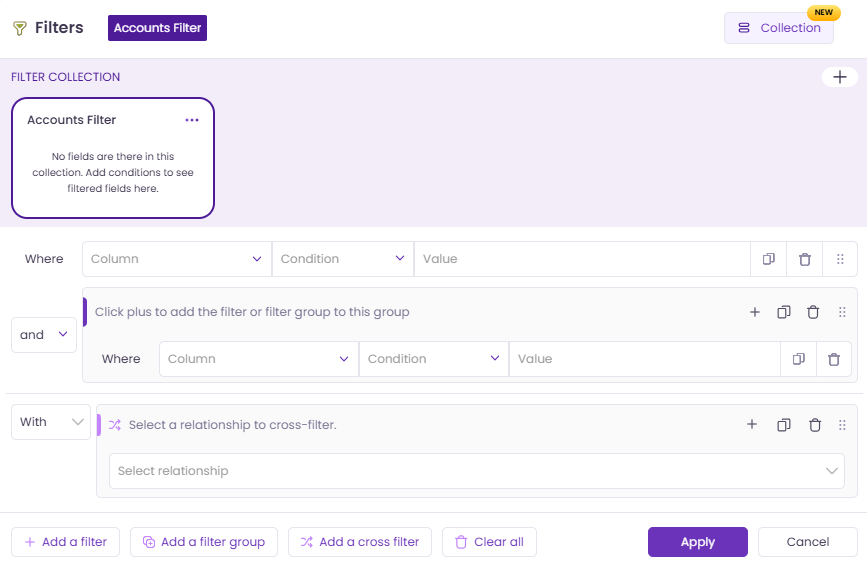
The Filters panel includes the following options:
Show – Limits records based on Salesforce-defined visibility scopes (Wave Extension Only)
Add a Filter – Adds a single filter condition
Add a Filter Group – Combines multiple filters using both AND and OR logic
Add a Cross Filter – Filters parent records based on related child records

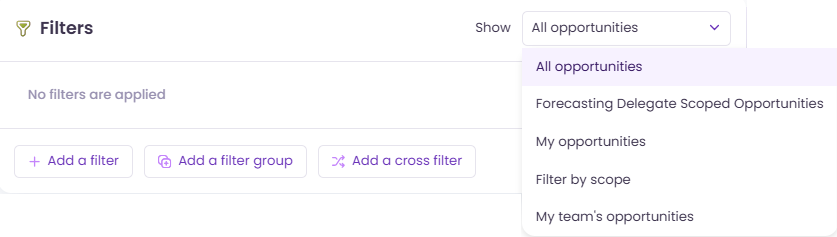
Show (Scope Filters)
The Show dropdown displays Salesforce standard visibility scopes for the selected object. These scopes determine which records are initially included before any additional filter conditions are applied. This is only applicable in Wave Extension.
The available options vary based on:
The selected object
Salesforce features enabled (such as Teams or Territories)
User role, permissions, and ownership
Examples
Lead object
All Leads
My Leads
Queue Owned Leads
My Team’s Leads
User Owned Leads
Filter by Scope (Salesforce-defined ownership or territory rules)
Account object
All Accounts
My Accounts
My Team’s Accounts
Filter by Scope (Salesforce-defined ownership or territory rules)
All filter conditions added later apply only to the records returned by the selected Show option.

Adding a Filter
Use Add a Filter to apply a single condition.
Filter Structure
Each filter row consists of three parts:
Field
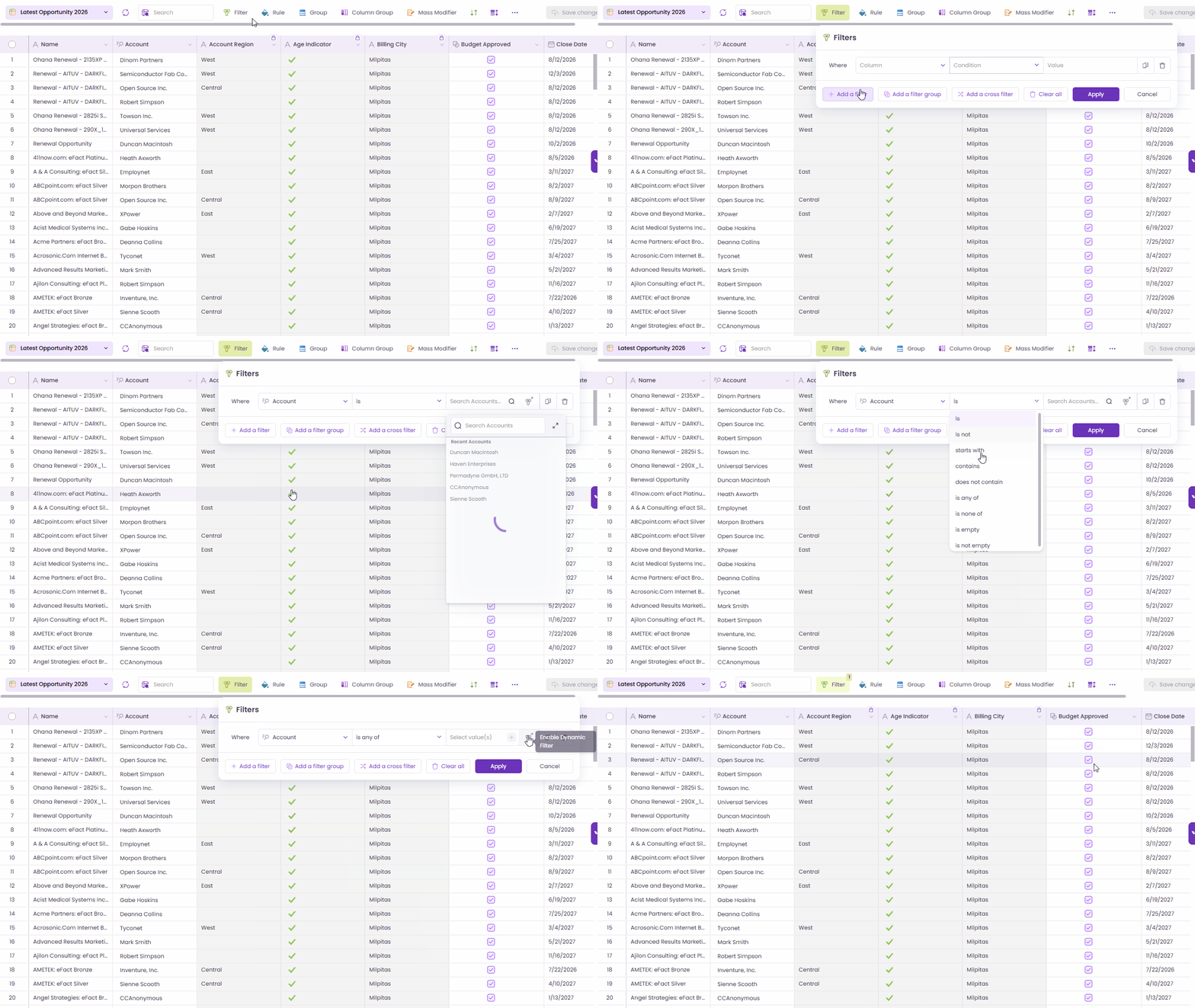
Select the column you want to filter. You can search for fields or filter by data type for faster selection.
Condition
Choose how the field should be compared. Refer to the Condition Quick Guide below for details.
Value
Enter the value to filter by. This can be a static value (fixed text, number, or date) or a Dynamic Parameter (Wave Embedded Only).
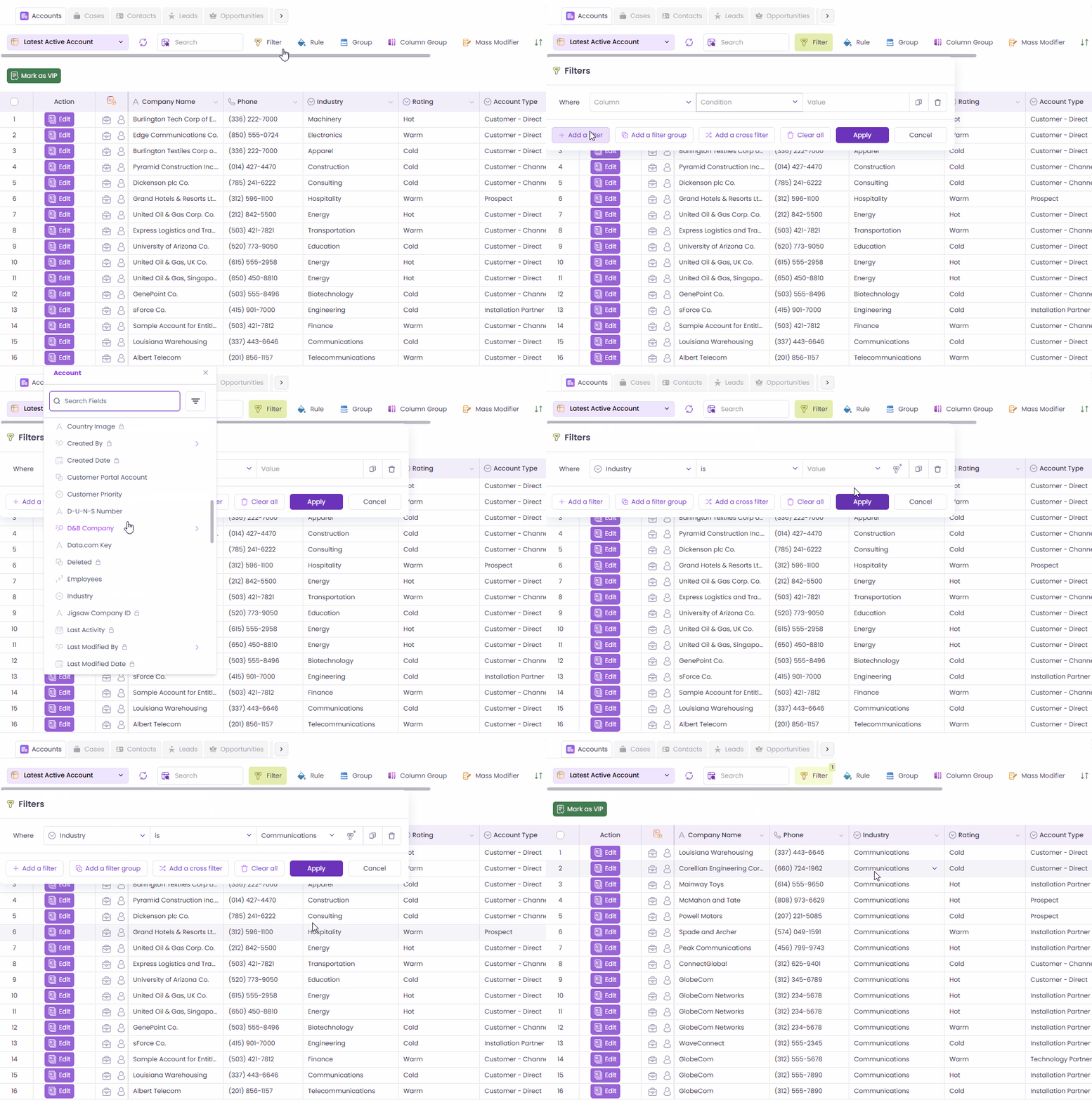
Steps
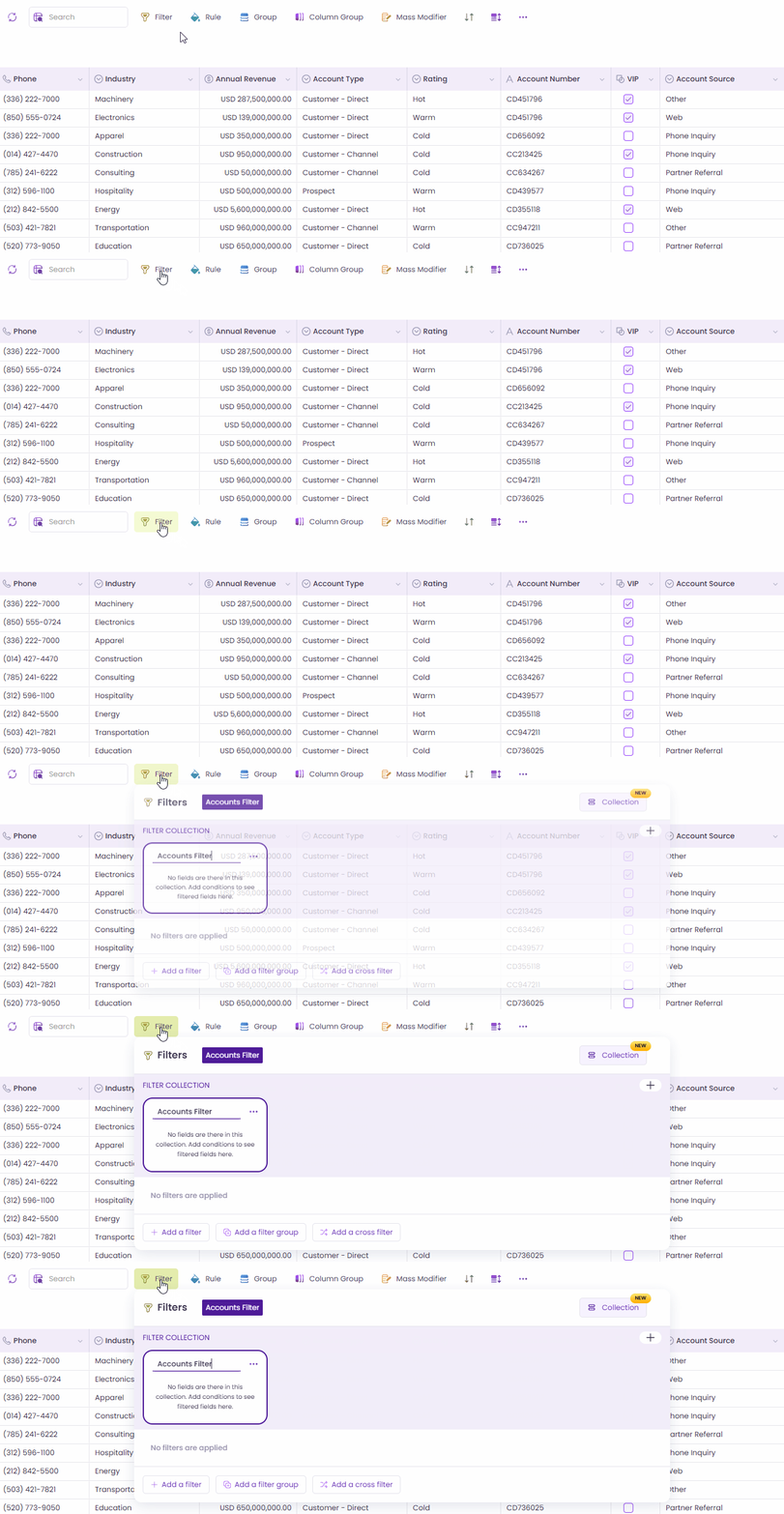
Click Filter
Click + Add a Filter
Choose a field, condition, and value
Click Apply

Condition Quick Guide
Contains
Field includes the specified value anywhere
Name Contains “John” → “John Smith”, “Alice Johnson”
When you want partial matches
Does Not Contain
Field does not include the specified value
Name Does Not Contain “John” → “Alice Smith”
To exclude records containing certain text
Starts With
Field begins with the specified value
Name Starts With “Jo” → “John Smith”, “Johnny Appleseed”
When matching the beginning of text
Ends With
Field ends with the specified value
Name Ends With “son” → “Alice Johnson”
When matching the end of text
Is
Field exactly matches the specified value
Stage Is “Closed Won” → Only “Closed Won”
When you need an exact match
Is Not
Field does not exactly match the specified value
Stage Is Not “Closed Won” → All others
To exclude exact values
Is Any Of
Field matches any value in a list
Billing State Is Any Of “Texas, Ohio” → Records in Texas or Ohio
When you want to match multiple specific values
Is None Of
Field does not match any value in a list
Industry Is None Of “Utilities, Retail” → All except Utilities or Retail
To exclude multiple specific values
Is Empty
Field has no value (blank)
Phone Is Empty → Records with no phone
To find missing information
Is Not Empty
Field has any value
Email Is Not Empty → Records with email
To find records with information
Applying Multiple Filters
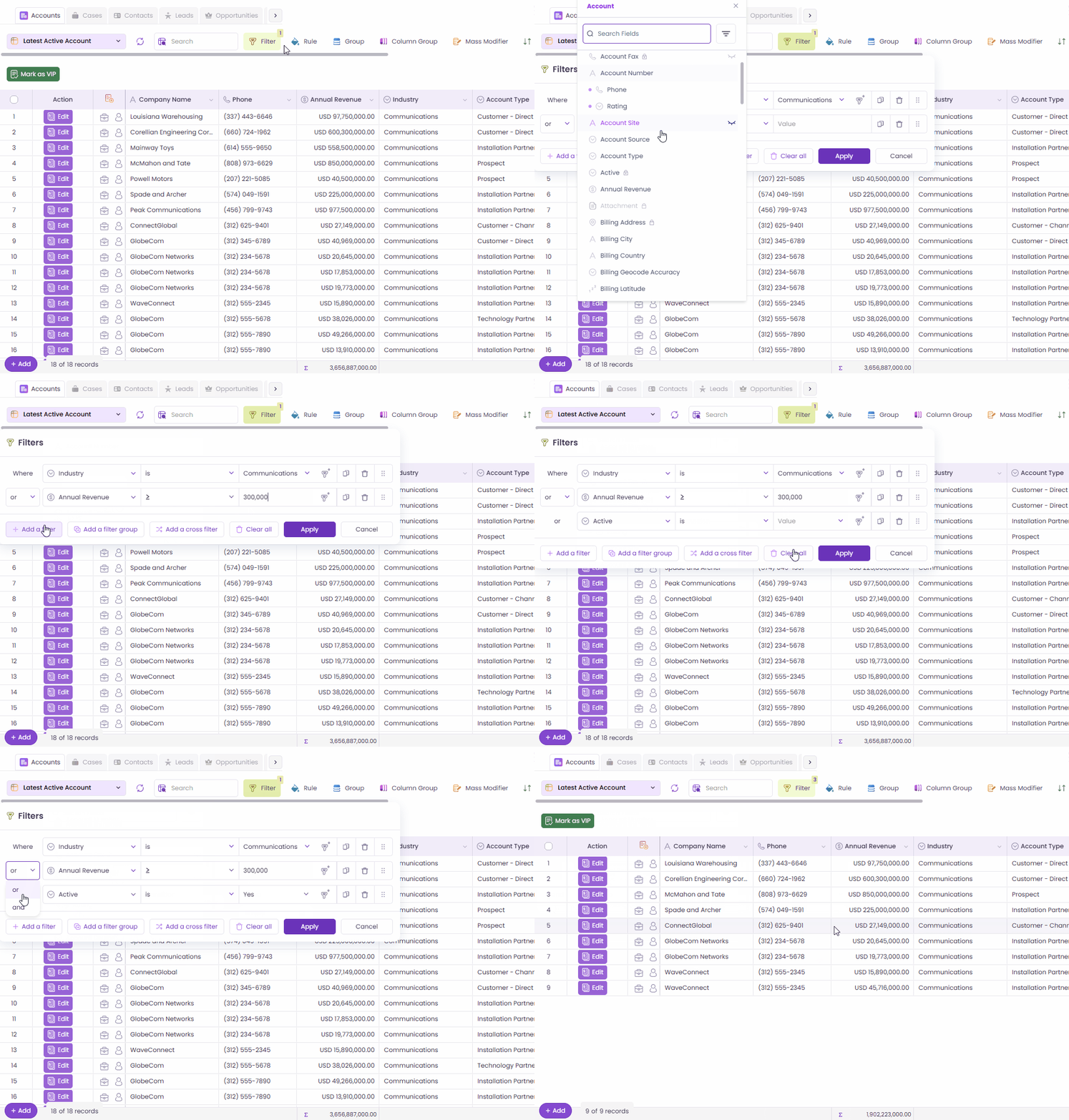
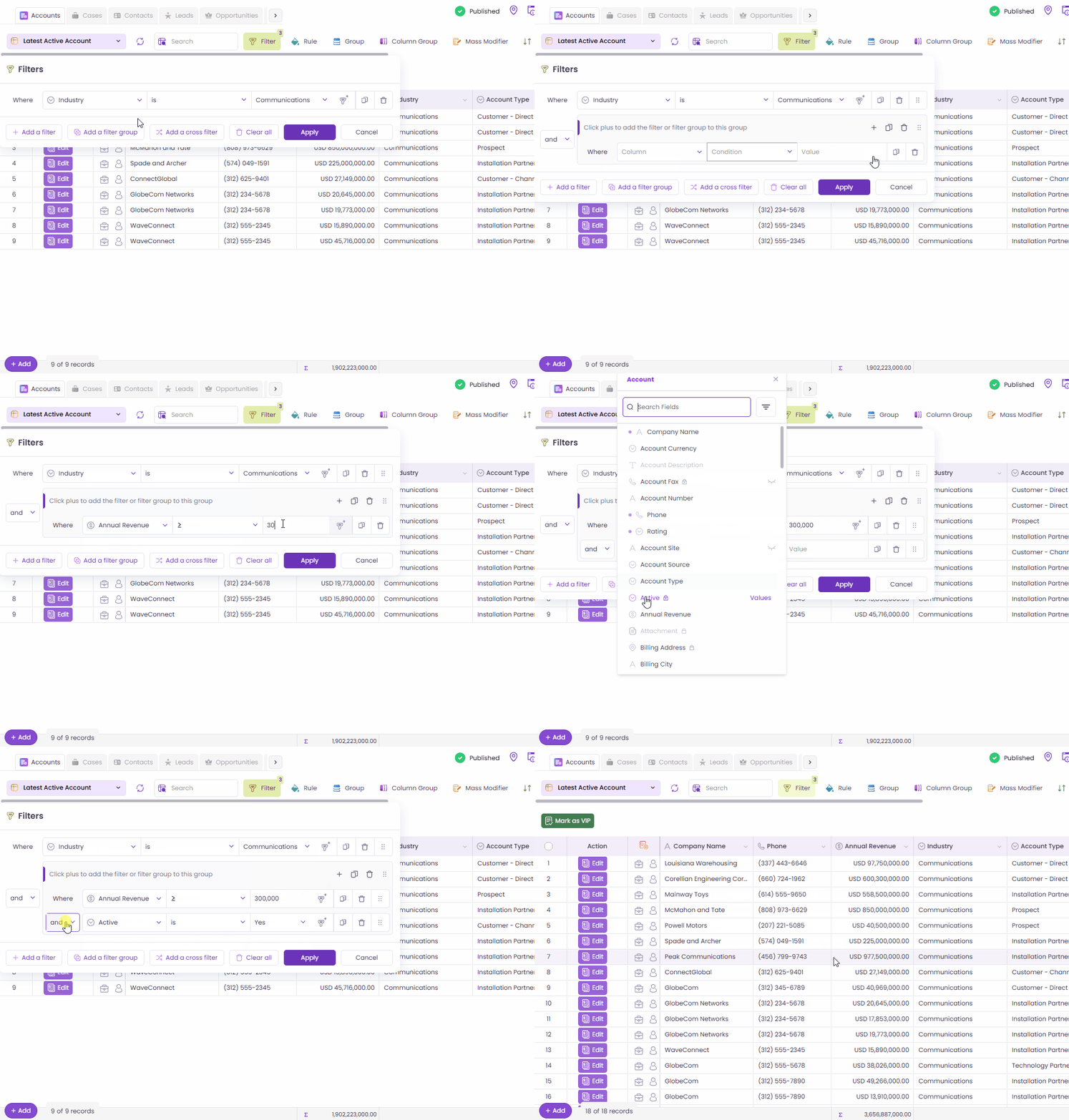
You can add multiple filters using + Add a Filter.
When applying multiple filters:
All conditions must use either AND or OR
Mixing AND and OR is not supported without a Filter Group
Example
Find Account where:
Industry is Communications AND
Annual Revenue is greater than 300,000 AND
Active is Yes

Filter Groups
Use Filter Groups when you need to combine AND and OR conditions in the same filter logic.
When to Use Filter Groups
Single logic (all AND or all OR)
Multiple Filters
Mixed logic (AND + OR)
Filter Group
Example
Find Account where:
Industry is Communications AND
Annual Revenue is greater than 300,000 OR
Active is Yes
Creating a Filter Group
Click Add a Filter Group
Choose AND or OR
Add filters or nested filter groups as needed
Click OK
Filter Groups allow you to be very precise by nesting conditions and combining logic.

Multiple Filters vs Filter Groups
When filtering data, you can apply multiple filters or use a filter group. The key difference is how conditions are combined.
Multiple Filters
Use multiple filters when all conditions use the same logic.
All conditions must use AND or OR
Simple and easy to configure
Ideal for straightforward filtering
Filter Groups
Use a filter group when you need to combine AND and OR conditions.
Allows mixing AND and OR
Supports nested conditions
Ideal for more complex filtering logic
Quick Tip
If your filter logic includes both “AND” and “OR”, use a Filter Group.
Cross Filters
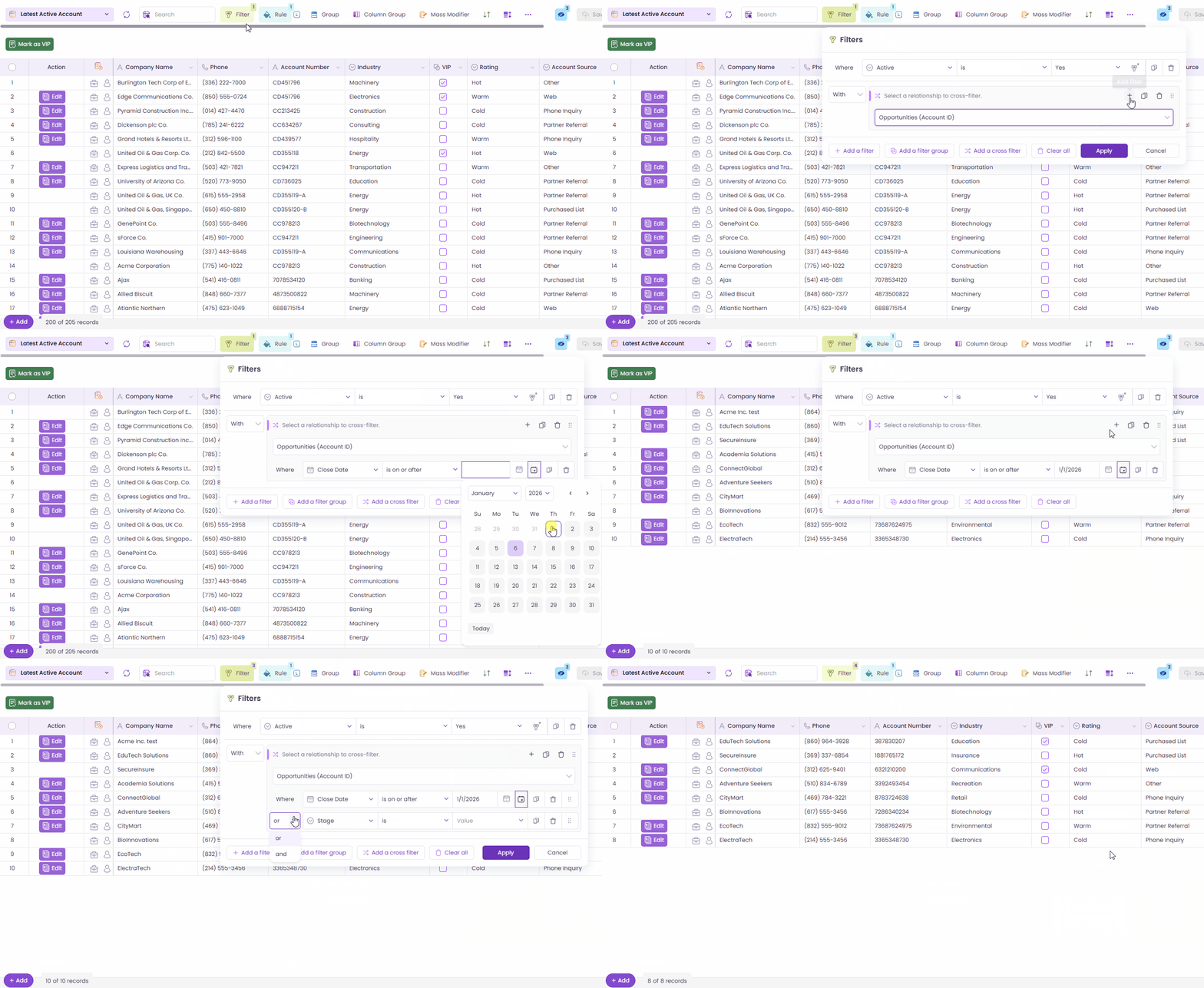
Cross Filters allow you to filter parent records based on related child records.
They help answer questions such as:
Accounts with Cases
Accounts without Contacts
Opportunities with Products but without Schedules
Supported Capabilities
With / Without related records
Multiple cross filters
Optional child-level conditions (With only)
Combination with standard filters and filter groups
Example: Accounts with Opportunity
Configuration
Grid Object: Account
Cross Filter: With → Opportunity
Result
Displays only Accounts that have at least one related Opportunity

Dynamic Filter (Wave Embedded Only)
Dynamic Filters allow filter values to be passed at runtime instead of using fixed values.
They are commonly used in:
Embedded grids
Flows
Components (LWC / Aura)
Dynamic Filters enable scenarios where filter values depend on:
User input
Context variables
Component parameters
Dynamic Filters are supported only in Wave Embedded.
Find out more about Dynamic Filter here:

Additional Notes
Copy a filter using the Copy icon
Remove a filter using the Delete icon
Use Clear All to remove all filters at once
The filter count appears on the Filters button when filters are applied
Standard Grid Behavior
When filters are applied to a Standard Grid for the first time:
A new Custom Grid is automatically created
A toast notification confirms the creation
All future changes are saved to the Custom Grid
Last updated
Was this helpful?